There is something really special about a good riddle. It is like a tiny mystery that lives inside a sentence. I remember being a kid and sitting at the dinner table trying to stump my parents with those classic “what am I” questions. Honestly, even as an adult, I still get a kick out of them. They are the perfect way to break the ice at a party or just keep the kids entertained during a long car ride without relying on a tablet screen. Riddles force your brain to look at things from a weird angle, and that “aha” moment when you finally figure it out is just so satisfying.
In this little collection, I’ve gathered some of my favorites. Some are easy enough for a five year old, and others might actually make you stop and scratch your head for a minute. Let’s see how many you can get right on the first try.
Easy Riddles for the Little Ones
When you are dealing with kids, the best riddles are the ones that use everyday objects they can see right in front of them. It builds their confidence and helps them think logically about the world. You don’t want anything too abstract because they’ll just get frustrated and go back to playing with their toys.
For example, try this one: I have a thumb and four fingers, but I am not alive. What am I? The answer is a glove. It is simple, but it makes them visualize the object in a new way. Another great one for the dinner table is: What has to be broken before you can use it? If they’ve ever helped you bake, they’ll shout out “an egg” pretty quickly. These are the “bread and butter” of childhood riddles. They aren’t meant to be impossible, just a fun little mental spark to get them talking.
Brain Teasers for the Adults
Now, as we get older, our brains get a bit more rigid. We start looking for complex answers when the solution is actually staring us right in the face. Adult riddles often play with words and double meanings. They are meant to lead you down the wrong path before you realize you’ve been tricked.
Check this one out: What is seen in the middle of March and April that can’t be seen at the beginning or end of either month? Most people start thinking about weather or holidays, but the answer is just the letter R. It is purely about the spelling. Or how about this: I am tall when I am young, and I am short when I am old. What am I? It is a candle. It’s a bit more poetic and makes you think about the passage of time. These are the kinds of riddles that are great for social gatherings because they usually lead to a lot of “oh, of course!” groans once the answer is revealed.
The Logic Puzzles That Might Trip You Up
Some riddles aren’t just about wordplay; they are about lateral thinking. You have to step outside the box and ignore what your brain thinks is the obvious answer. These are usually the ones that cause the most friendly arguments among friends.
A classic example is: A man is pushing his car in raymond ronquillo and stops at a hotel. He immediately knows he is bankrupt. Why? If you aren’t a board game fan, you might struggle. But if you’ve ever played Monopoly, you know exactly what happened. He landed on a property he couldn’t afford. Another one that I always loved is: What can travel around the world while staying in a corner? The answer is a stamp. It’s clever because it plays with the physical reality of how we send letters. These require you to look at the context of the situation rather than just the words themselves.
Riddles About Nature and the Elements
The natural world provides so much inspiration for riddles because nature is full of strange behaviors and patterns. These tend to be a bit more atmospheric and can feel almost like tiny poems. I find that these are the ones that stick in your memory the longest because they feel very timeless.
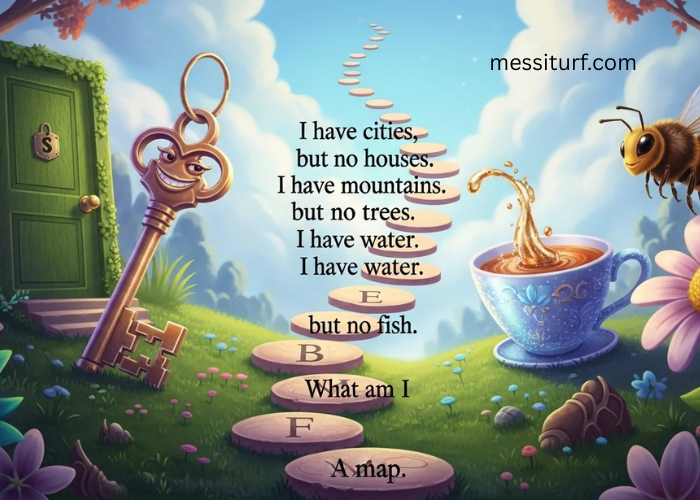
Think about this one: I have cities, but no houses. I have mountains, but no trees. I have water, but no fish. What am I? It’s a map. It creates a whole landscape in your mind that doesn’t actually exist. Or consider this: I can fly but have no wings. I can cry but have no eyes. Wherever I go, darkness follows me. The answer is a cloud. There is a certain beauty in how these describe the world. They remind us that even the most common things around us can be described in mysterious and magical ways.
Why We Should Keep Solving Them
In a world where we can just Google the answer to anything in three seconds, riddles remind us of the value of thinking things through. They teach patience and grit. When you’re stumped, your brain is actually working hard to create new connections. It is a form of mental exercise that is actually fun.
Plus, riddles are a great way to bond. Sharing a riddle with someone is like giving them a little gift. It’s a shared experience of confusion and then collective joy when the mystery is solved. Whether you’re a parent trying to teach your kid some logic or an adult just looking to keep your mind sharp, these little puzzles are a great tool to have in your back pocket. They don’t cost anything, they don’t require batteries, and they never get old.
Final Thoughts on the Joy of Puzzles
So there you have it, a little mix of the easy, the hard, and the clever. Next time you find yourself with a few minutes of downtime, try one of these out on a friend or a family member. It beats staring at a phone screen any day.
Riddles are one of the oldest forms of entertainment for a reason. They touch on our natural curiosity and our desire to solve problems. Whether you got all of these right or struggled with every single one, the point is that you gave your brain a little workout. Keep questioning, keep thinking, and never stop looking for the hidden answers in the world around you. After all, life itself is a bit of a riddle, isn’t it? Enjoy the process of figuring it all out.